How QR Code Tracking Reduces Errors in Custom Sportswear Production
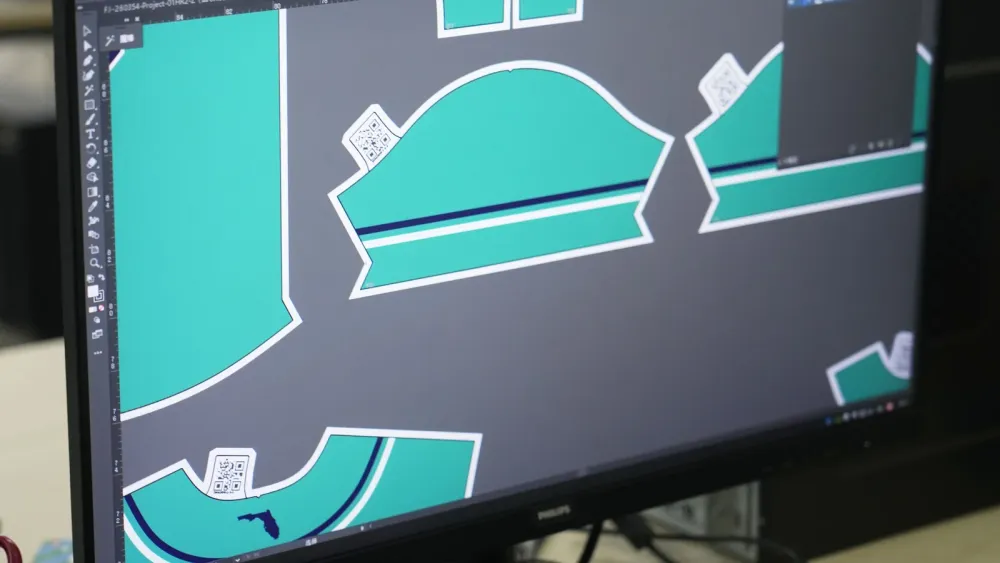
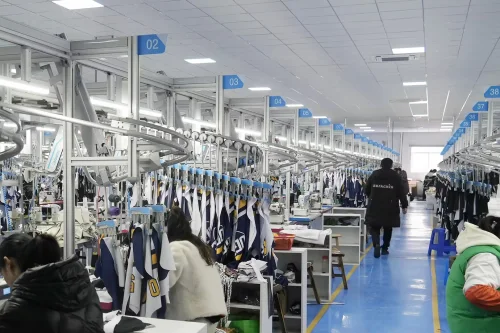
A QR identity can be assigned while production artwork is being prepared, before physical panels move through the factory.
A custom teamwear order can contain one design but dozens of variable combinations: garment sizes, player names, numbers, colorways, sleeve types and matching shorts. The panels may look nearly identical before sewing, yet one belongs to player 7 in size M and another to player 17 in size L. That is where a small identification mistake can become a finished-garment problem.
QR code tracking reduces this risk by giving a panel, bundle or garment a digital identity that workers and equipment can check as the order moves from production artwork to printing, sorting, sewing and final verification. Instead of relying only on handwritten labels or visual memory, the factory can connect each physical component to controlled order data.
The important word is reduces. A QR code is a control tool, not a magic guarantee. It helps prevent mix-ups, exposes exceptions earlier and improves traceability, but the system still depends on accurate source data, readable codes, completed scans and human quality checks.
Why Custom Sportswear Is Vulnerable to Identification Errors
Standard garments repeat the same specification across a production run. Custom sportswear adds variable data to that repeatable product: one player’s name, another player’s number, several sizes and sometimes different goalkeeper or captain details. The more combinations an order contains, the harder it becomes to identify every panel reliably by appearance alone.
Three error types matter particularly to clubs, retailers and private-label brands:
Wrong data: the approved roster contains a misspelled name, duplicated number or incorrect size.
Wrong identity: a correctly printed panel is placed in the wrong size or player bundle.
Wrong routing: a component skips a required stage, enters the wrong style group or is not isolated after an exception.
QR tracking is most effective against identity and routing errors. It can also make a data error easier to trace, but it cannot decide that a buyer-approved spelling was wrong. That distinction is essential when evaluating any “smart factory” claim.
How the QR Identity Starts at the Design and Production-File Stage
The control process should begin before printing. Once the buyer approves the design, roster, sizes and garment specification, the production file can associate each panel with the correct order, style, size and personalization data. A QR code placed in an appropriate production area becomes the machine-readable link between that digital record and the physical panel.
This early assignment creates a practical chain of identity. The same record that tells the artwork team which number belongs on a jersey can later help a sorter verify where the printed panel should go. When the factory uses one controlled version of the data, downstream teams are less dependent on separate spreadsheets or retyped instructions.
For the buyer, the main control point remains approval. Before the production file is released, confirm:
player names, numbers and sizes;
style, colorway and garment components;
front, back, sleeve and shorts placements;
authorized logos and sponsor artwork;
the final file version and order quantity.
We recommend using a locked, approved roster table and production specification. We do not recommend sending roster changes through scattered chat messages after approval, because a tracking system can faithfully process the wrong version if version control is weak.
What QR Codes Do During Printing and Panel Preparation
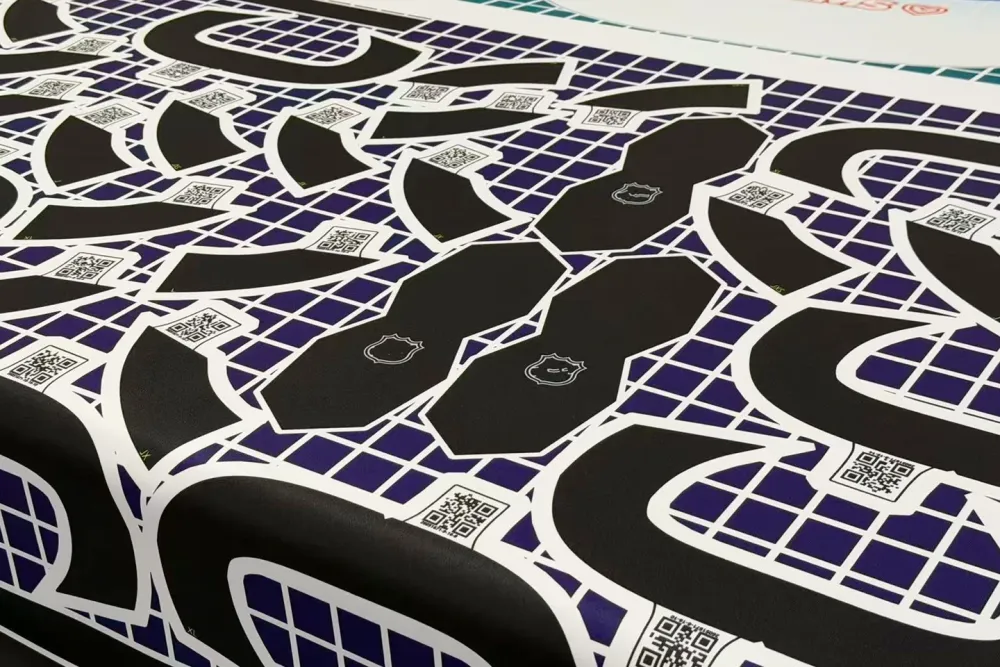
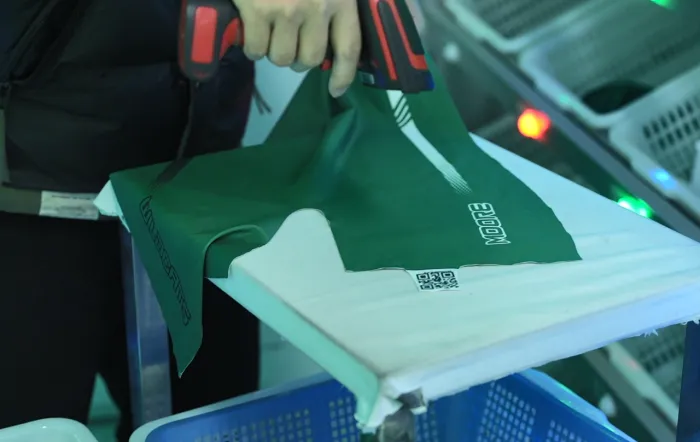
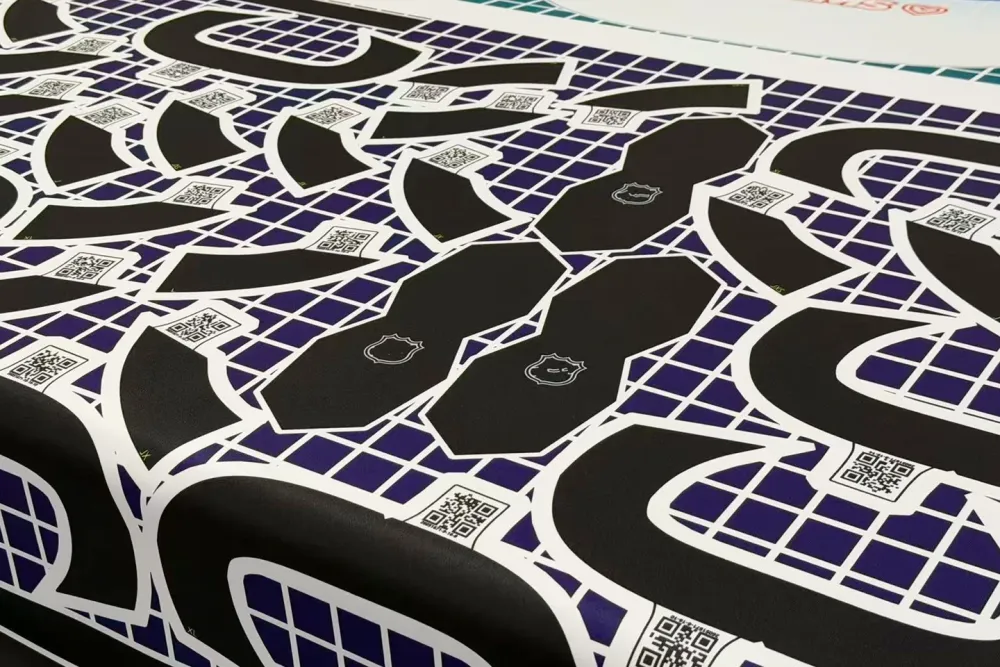
Individual printed panels carry visible QR identifiers that can support panel-level tracking before cutting and assembly.
After artwork is printed, the physical sheet may contain many shapes: body panels, sleeves, collar components and other pieces. Several may share the same colors and graphics. A visible QR identifier gives the production team a faster way to distinguish components that would otherwise require close manual comparison.
At a scan point, the system can compare the physical code with the expected job record. Depending on the configured workflow, that record may include the order, garment style, size, player detail and next production step. The benefit is not simply faster scanning; it is the opportunity to stop a mismatch before the wrong panel travels deeper into production.
However, buyers should not assume that every code stores every field or that every production stage is automatically blocked. Ask the supplier which data is linked, where scanning is mandatory and what happens when a code is unreadable or does not match the expected route.
How Smart Sorting Reduces Mixed Sizes, Styles and Player Details
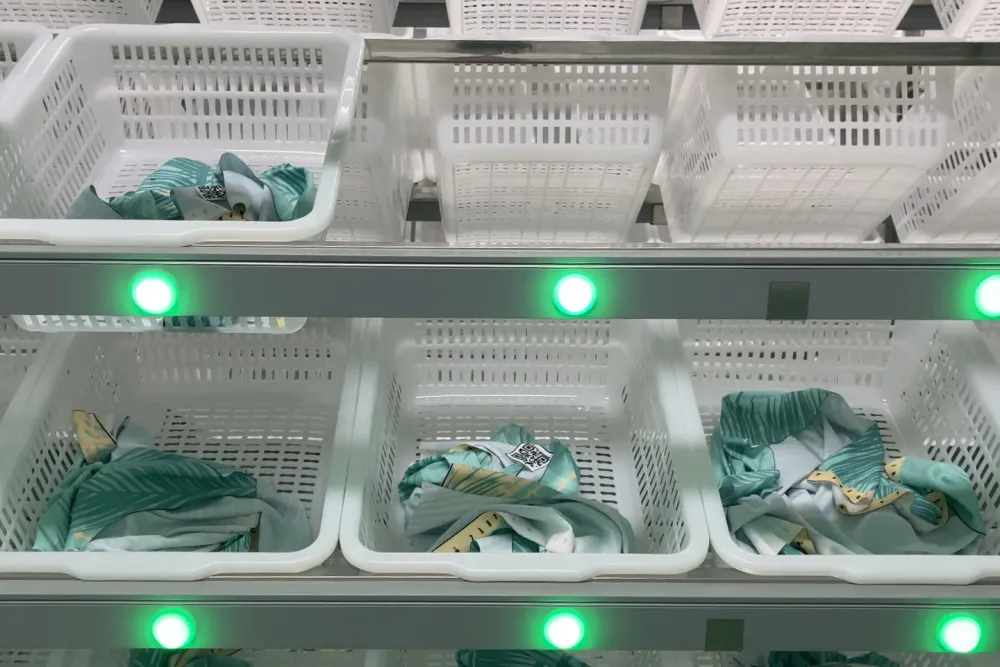
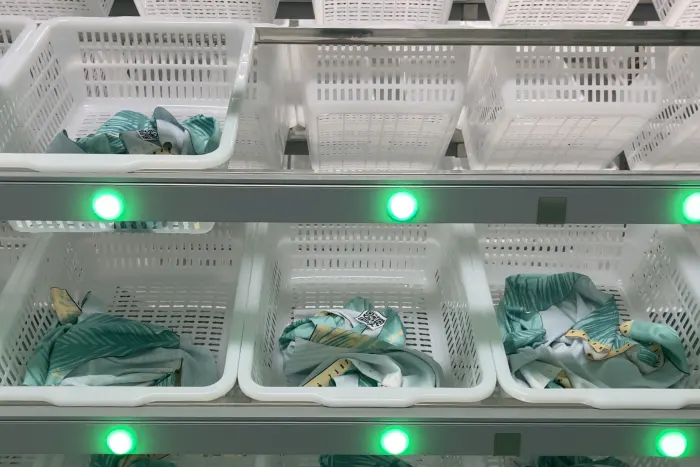
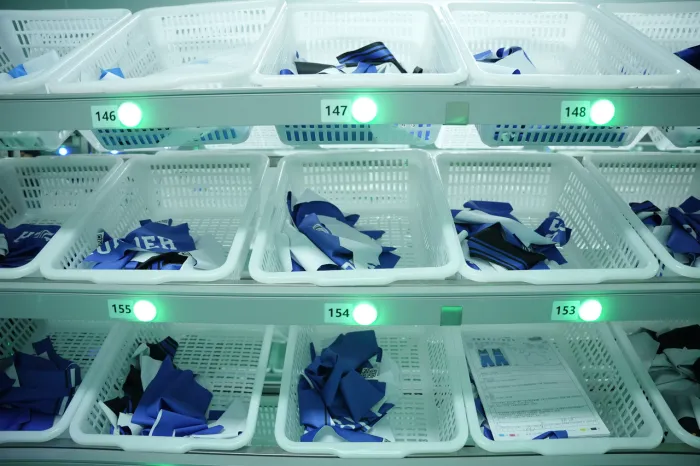
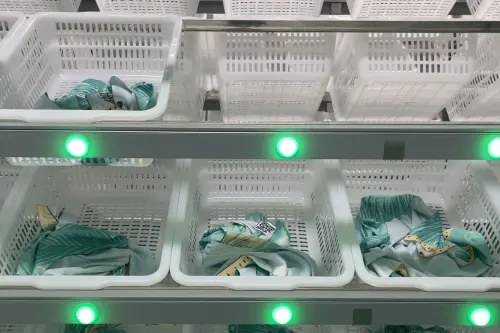
Garment components are separated into assigned bins, helping keep similar-looking sizes and player configurations apart.
Sorting is one of the highest-risk handoff points in customized teamwear. Printed pieces can be correct individually and still become a wrong garment if a sleeve, body or personalized panel joins the wrong bundle.
A smart sorting station combines scanning with a defined physical location. When a worker scans a component, an indicator can direct it to the assigned bin. The digital identity and the physical container reinforce one another: the code answers “what is this?” while the illuminated location answers “where does it go next?”
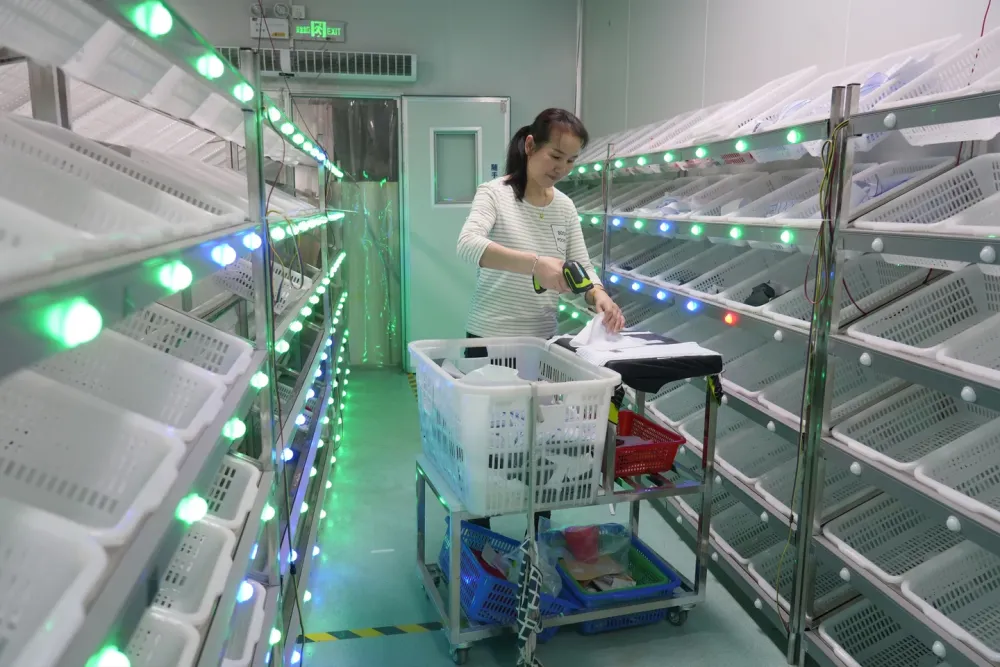
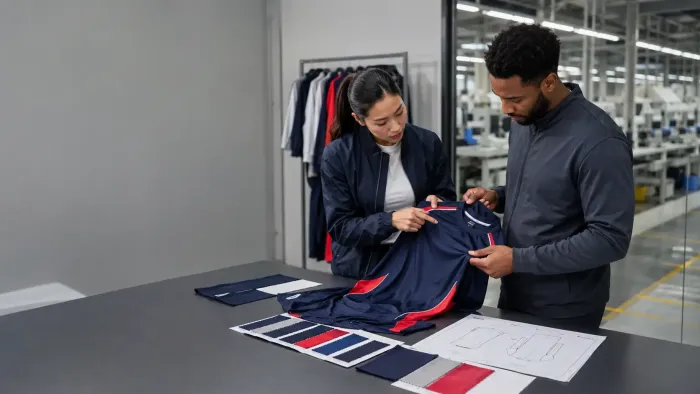
A worker scans components at the sorting station; human handling remains part of the controlled process.
This does not remove people from the workflow. It gives them a clearer decision signal and creates a record of the handoff. Human operators still need to confirm obvious visual problems, protect codes from damage and follow the exception procedure when the system flags a mismatch.
Where QR Tracking Changes the Error-Control Model
| Control point | Without linked identity | With QR-linked identity | Remaining limitation |
|---|---|---|---|
| Production file | Teams may work from separate lists or manually copied labels. | Approved data can be associated with each panel or garment record. | Incorrect approved data remains incorrect. |
| Printed panels | Similar panels rely heavily on visual comparison. | A scan can confirm style, size or personalization against the job record. | Unreadable codes and skipped scans require an exception process. |
| Sorting | Manual bundles can be mixed during repetitive handling. | A scan can direct the component to a defined physical bin. | The operator must follow the indicated route. |
| QC and investigation | Teams may reconstruct the route from memory or paperwork. | Scan history can help locate where an exception entered the workflow. | Traceability depends on which events the system actually records. |
| Reorders | Past specifications may be scattered across files. | Archived order identity can support retrieval of approved production data. | Materials, colors and processes still need availability confirmation. |
Tonton Manufacturing Knowledge: QR Codes Need a Controlled Data Chain
Tonton describes its QR-based system as assigning a unique digital identity to fabric panels or garments and using scans through production and sorting. The manufacturing lesson is that the code is only one link in the control chain. Error reduction comes from connecting four elements: an approved source file, a readable physical code, mandatory scan points and a documented response when the scan does not match.
This leads to several practical procurement rules:
Recommended: freeze the approved roster and specification before production release, with one named version owner.
Recommended: ask which checkpoints scan the panel, bundle or garment and which fields are verified at each point.
Recommended: retain human QC for artwork appearance, color, construction, measurements and final packing; a QR scan cannot evaluate every physical quality characteristic.
Not recommended: treating “QR tracked” as evidence that the product is automatically defect-free.
Not recommended: approving late roster changes without confirming that the production record, printed codes and active work orders were all updated.
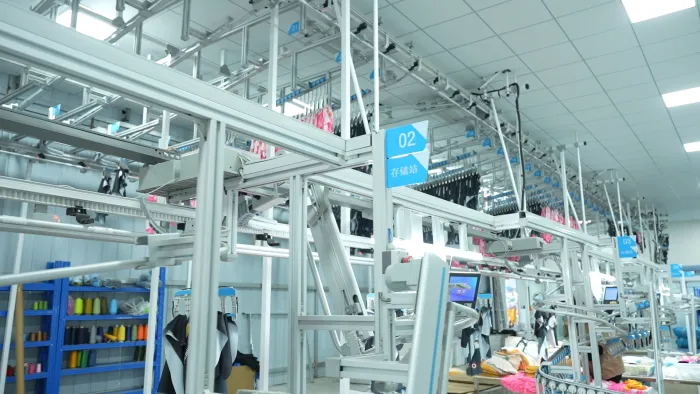
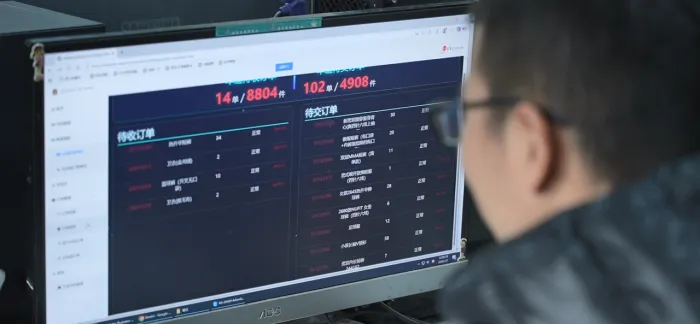
A measurable system should be assessed by its records, not only by the presence of codes in a factory photo. Buyers can request an explanation of scan coverage, exception handling, record retention and final verification. The appropriate evidence will vary with the product and project; sensitive operational data may not be shareable in full.
What QR Tracking Does Not Replace
Identification control and product quality are related, but they are not identical. A correctly routed panel can still have a print, seam, measurement or material issue. For this reason, QR tracking should work alongside—not replace—artwork approval, color and fabric checks, in-process construction inspection, measurement review and final order verification.
It also does not replace a physical sample when fit, fabric hand feel, construction or color is commercially important. The QR identity helps ensure that the approved configuration follows the intended route. The sample helps establish what the approved configuration should actually be.
Questions to Include in a Supplier RFQ
When QR traceability matters to your program, add these questions to the request for quotation or supplier audit:
At what point is the unique QR identity created?
Is the code assigned to a panel, bundle, garment or order?
Which fields are connected to it: style, size, colorway, name, number or process stage?
Where are scans mandatory from printing through sorting, sewing, QC and packing?
What happens when a code is missing, damaged, duplicated or routed incorrectly?
Can an approved change update all active records before production continues?
Which scan and exception records are retained for investigation or reorders?
Which quality characteristics still require visual, measurement or physical inspection?
Editorial note from Tonton Sportswear Editorial Team: Reviewed with input from Tonton’s Technical Production Advisor. In customized teamwear, names, numbers, sizes and visually similar panels create a data-control problem as much as a sewing problem. A scanable identity is useful when it connects the approved buyer data to a physical checkpoint and a clear exception response.
Discuss a traceable custom sportswear production plan with Tonton Sportswear. Include your sport, garment type, quantity, roster complexity, target date, artwork status and the production records you need.
From a Visible Code to a More Controllable Order
QR code tracking reduces custom sportswear errors by making identity checkable at the points where digital instructions become physical products. It can connect approved artwork to printed panels, direct similar components into the correct sorting location and preserve a route for investigation when something does not match.
The best question for a buyer is not “Does the factory use QR codes?” It is “Which decisions does the QR system verify, where does it verify them and what happens when the answer is wrong?” A supplier that can explain that chain is showing a control process—not just a label.
Frequently Asked Questions About QR Code Tracking in Custom Sportswear
1. What information can a QR code track in custom sportswear production?
A production QR code can link a panel or garment to controlled order data such as style, size, colorway, player name, number and current workflow stage. The exact fields depend on the manufacturer’s system and the approved order specification.
2. Does QR code tracking guarantee error-free custom jerseys?
No. QR tracking can reduce identification and sorting errors and make exceptions easier to trace, but it still depends on correct source data, readable codes, completed scans and human quality checks.
3. Why are names and numbers a high-risk part of teamwear production?
Names and numbers vary by player while many garment panels look similar. If roster data, size data or bundle identity is wrong, a visually acceptable panel can still belong to the wrong player or garment.
4. What should a buyer approve before QR-coded production begins?
Approve the artwork, spelling, roster, numbers, sizes, colorway, garment specification, quantities and version of the production file. QR codes improve control after data entry; they do not correct an inaccurate approved file.
5. How should buyers evaluate a supplier’s QR tracking system?
Ask where codes are created and scanned, which data they link to, how exceptions are blocked, how damaged codes are handled, which records are retained and where human QC remains in the process.